
Deep Time — The 230-Million-Year Avian Lineage
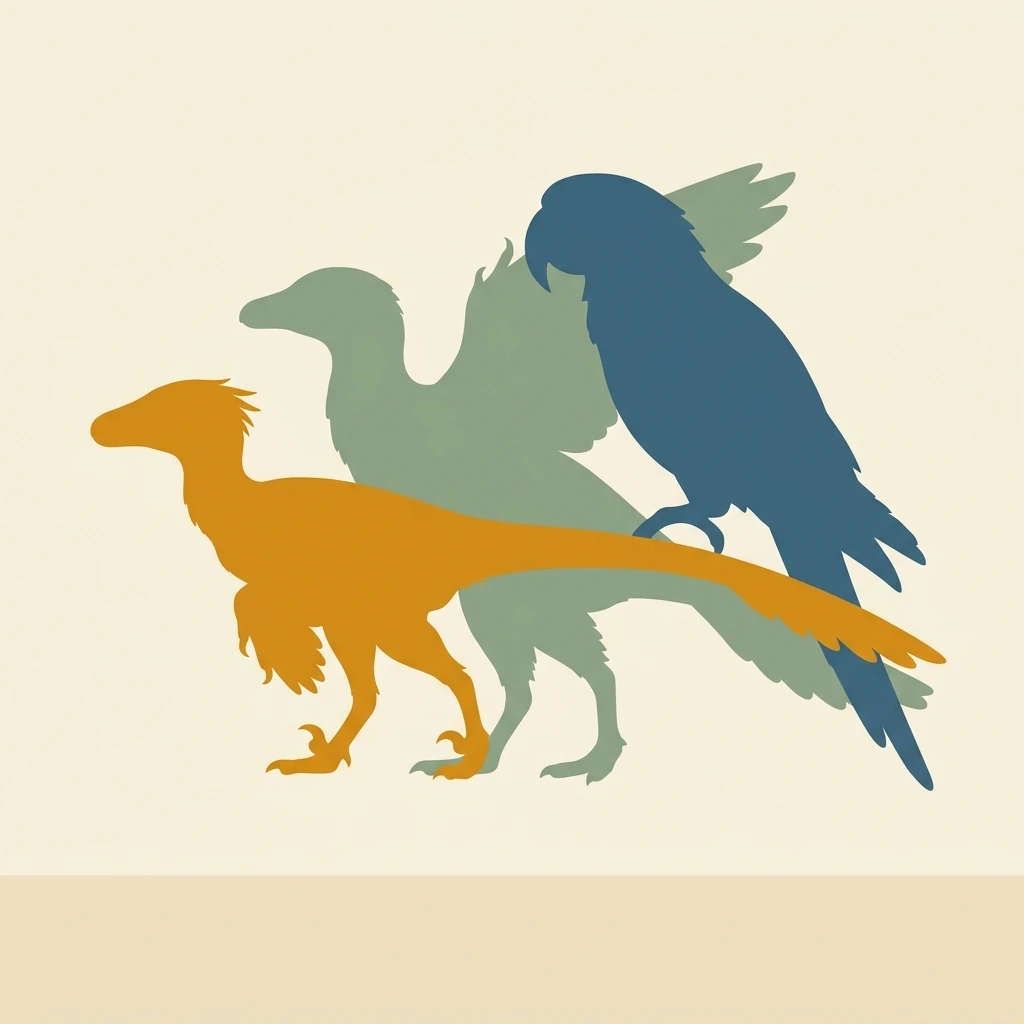
Welcome to Volume II of The Field Guide. While Volume I covers living birds in wild habitats and human homes, Volume II investigates the 230-million-year theropod ancestry behind them. Modern birds are living dinosaurs—cladistically, anatomically, and behaviorally.
Volume II Hub Architecture (9 Research Hubs + Theater)
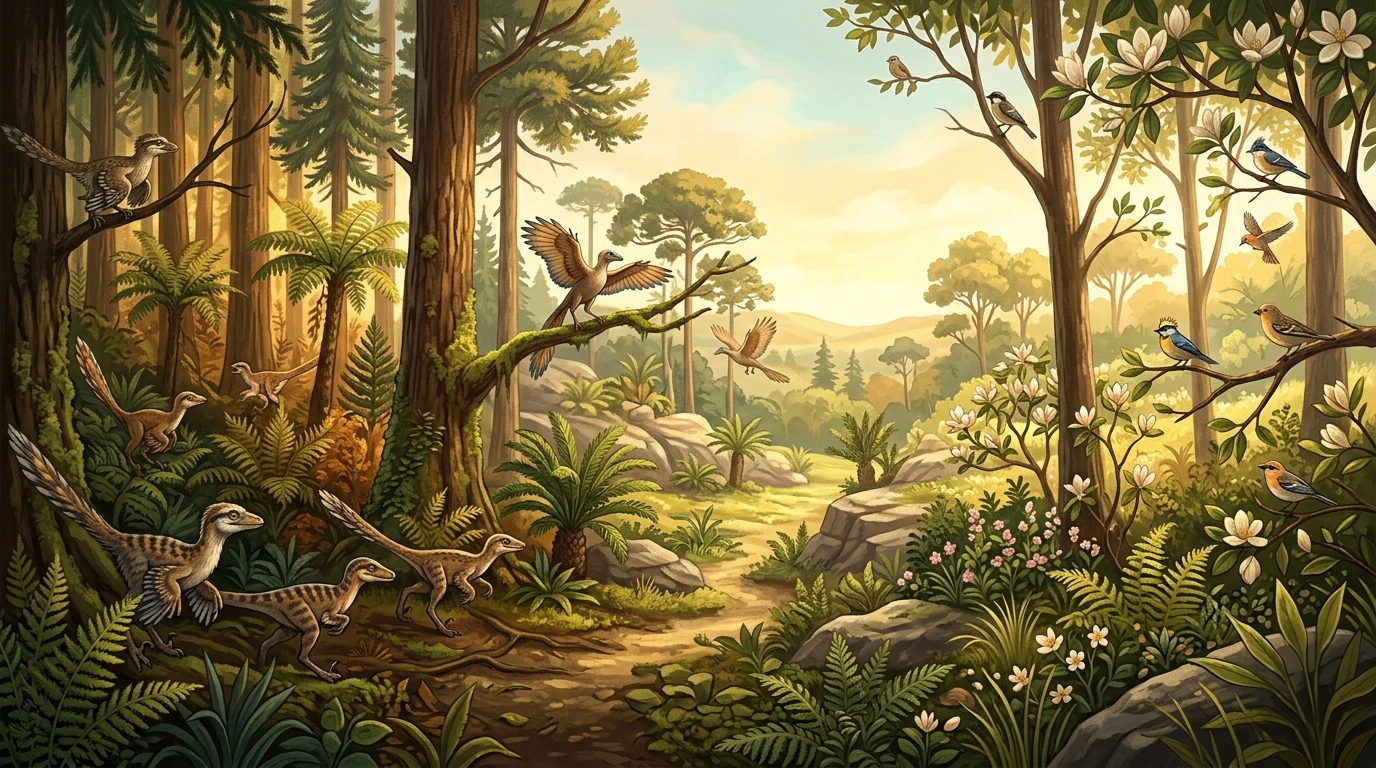
Dino Display & Theater
Curated paleontological documentaries, 3D anatomical reconstructions, and feather evolution scientific video presentations.
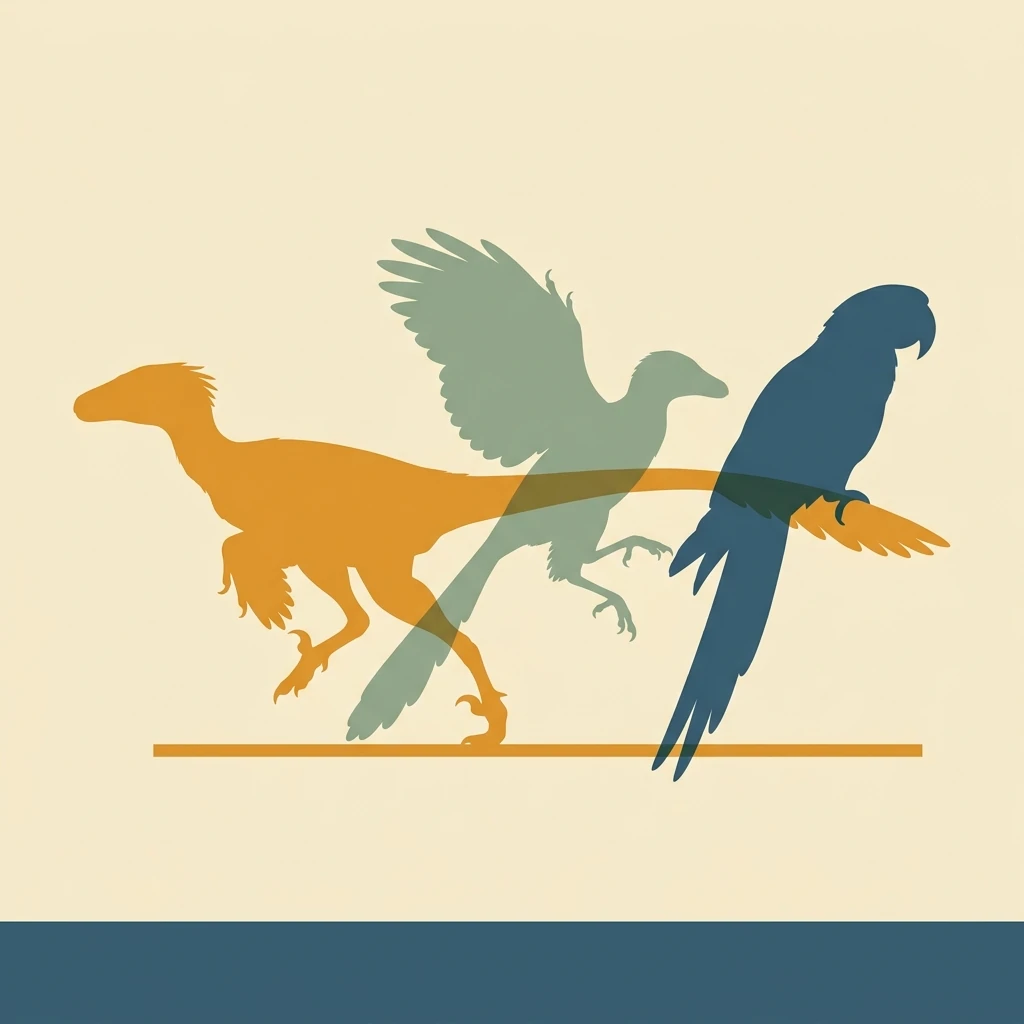
1. The Animals (Taxa Spine)
Canonical organism records: theropods, dromaeosaurs, oviraptorosaurs, troodontids, avialans, and non-avian lineages.
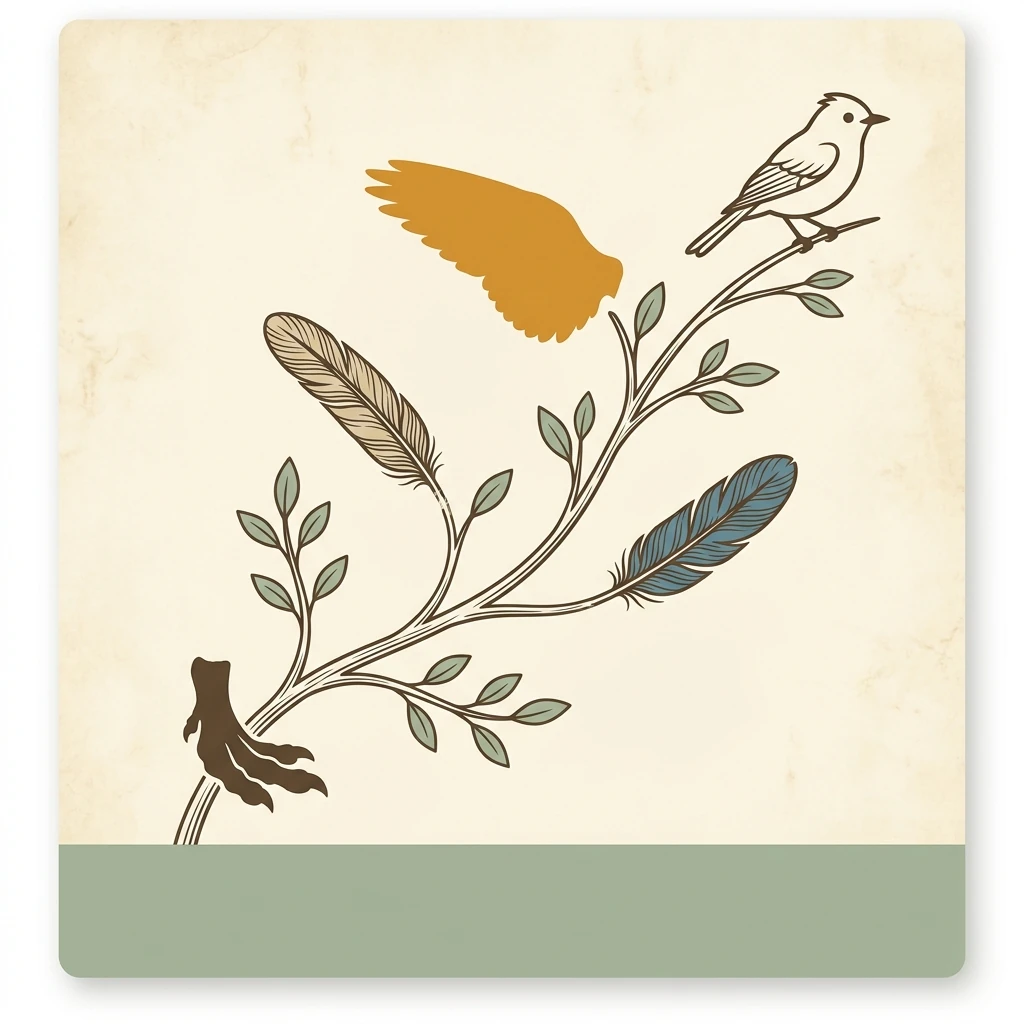
2. Cladistics & Lineage
How to read a cladogram, synapomorphies, nested trees from Dinosauria to Neornithes, and taxonomic debates.
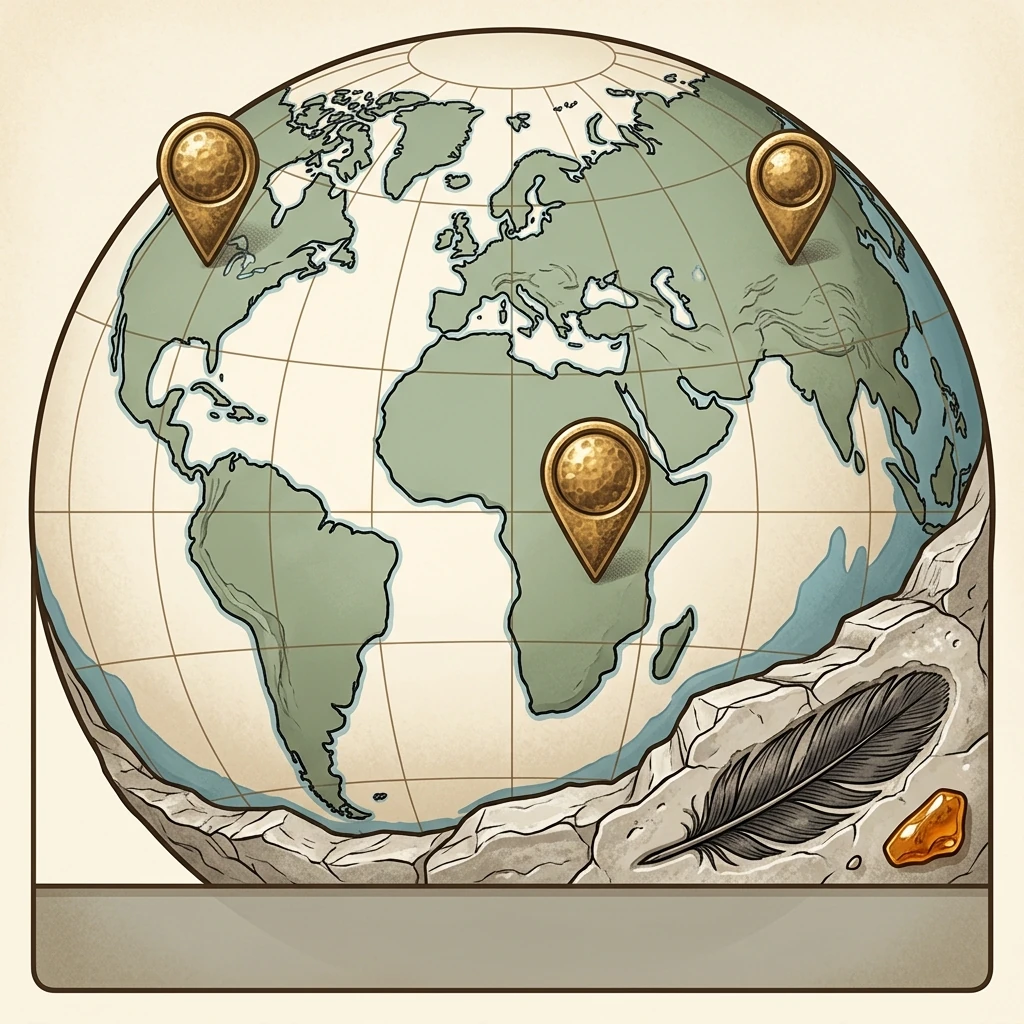
3. Feather Evolution Lab
Prum & Brush 5-stage model, thermoregulation, display plumage, melanosome color science, and pterosaur pycnofibers.
4. Flight Mechanics & Origins
Trees-down vs ground-up, WAIR, four-wing Microraptor, membranous wings (Yi qi), and repeated flightlessness.

5. Anatomy & Physiology
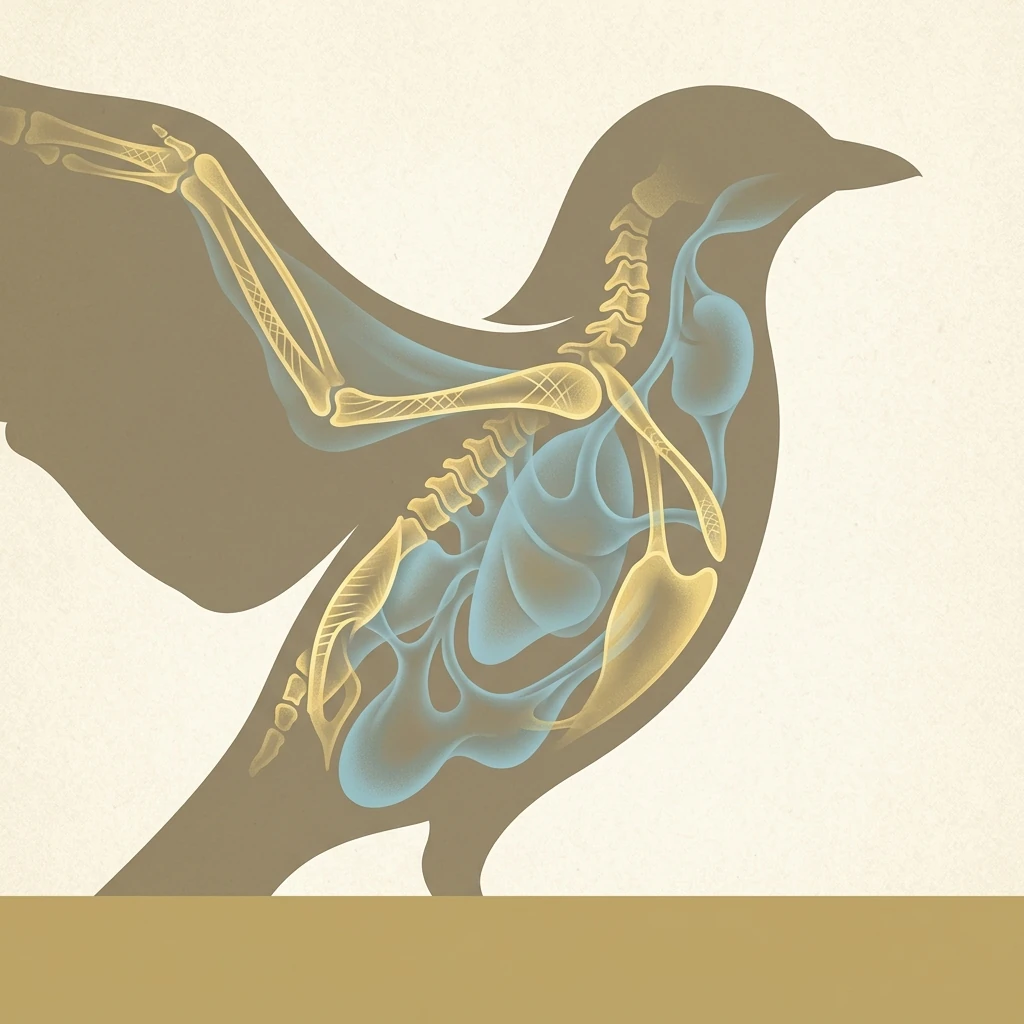
Air sacs, flow-through lungs, bone pneumatization, wishbones, semilunate wrist, syrinx, and warm-bloodedness.

6. Behavior & Nesting
Brooding postures (Citipati), sleeping postures (Mei long), eggshell pigments, courtship display, and sociality.

7. Fossil Localities & Sites
Solnhofen, Yixian / Jehol, Burmese Amber, Gobi Desert, Hell Creek, and stem-parrot Messel Pit / Green River.

8. Deep Time Timeline
Triassic origins through Mesozoic, 66 Ma Chicxulub asteroid impact, forest collapse, and Paleogene avian explosion.
9. Methods & Confidence
Taphonomy, phylogenetic bracketing, melanosome imaging, and the 5-tier evidence confidence rating system.
The Living Parrot Bridge
Volume I is about the bird in the room. Volume II is about the deep history that built it. These eight cards are the joints between the two volumes, and they are the easiest place on this site to overclaim, so each one says plainly where the fossil evidence stops and where the living-bird evidence takes over.
The correction that matters most: inheritance is not the same as causation. Parrots really did inherit an air-sac respiratory system, a wishbone, a folding wrist and a syrinx from theropod ancestors, and that part is well documented. But "inherited from dinosaurs" does not, on its own, explain why an overheated pan kills a bird or why a grey learns words. Where an earlier version of this bridge let one ancient trait carry a whole explanation, these cards name all the pieces and label each one.
BRACKETED (a) Air sacs and the hot pan — a real inheritance, a more complicated cause
What the fossils show. Postcranial skeletal pneumaticity — hollow, air-invaded vertebrae and other bones — is preserved in non-avian theropods, and in living birds those same osteological correlates accompany cervical and abdominal air sacs and an avian-style aspiration pump. So the pneumatic bone is DIRECT and the soft-tissue air sacs are BRACKETED, inferred from the living bracket rather than observed in the rock. The outgroup keeps that bracket honest: crocodilians have unidirectional airflow but no air sacs and no pneumaticity.
Where the popular version overreaches. The familiar line is that a bird's one-way, flow-through breathing is why PTFE fumes are lethal in minutes, as though the system concentrated the toxin. The inheritance chain behind that sentence is sound. The causation is not mono-causal, and this site should not imply that unidirectional flow is a toxin-concentrating mechanism.
The corrected chain. PTFE starts to degrade at around 280°C; hazardous fumes are typically cited from roughly 300–450°C, with acute lung injury above about 450°C. Pyrolysis releases toxic particulates and acidic gases. Birds are exceptionally sensitive to airborne toxicants generally — the result of a high mass-specific metabolic rate, a large respiratory surface area, and efficient cross-current gas exchange. The outcome is acute pulmonary haemorrhage and oedema, and rapid death. In a budgerigar study, exposures of nine minutes or longer were lethal in 97% of birds.
Efficiency contributes to sensitivity. It does not concentrate the toxin. That distinction is the point of the card: the anatomy explains why a bird has the most vulnerable lungs in the household, and the chemistry explains what is in the air. The hazard needs both halves.
Volume I → Hazards · PTFE and nonstick exposure
DIRECT (b) Gizzard stones, and why a parrot does not need grit
Many theropods and early birds swallowed stones. Gastroliths — gizzard stones held in the muscular gut and used to grind food — are preserved directly, and the habit persists across a great deal of the living bird tree.
Modern parrots do something different. They hull their seeds with the beak before swallowing, so they do not require insoluble grit to process food. Routine grit feeding is unnecessary for them and can cause impaction, which is why the household rule is to skip it rather than offer it by default.
The nuance that keeps this honest. Some granivorous birds — pigeons and fowl among them — genuinely do use grit. The no-grit rule is parrot-specific, not a rule about birds. Carrying it across to a dove, a chicken or a quail would be exactly the kind of over-generalisation this bridge exists to prevent.
Volume I → Diet · Do not add grit by routine
CONTESTED (c) Fossil colour science stops short of parrot colour
What the method does. Fossil melanosomes — the pigment organelles that carry melanin — sometimes survive in feather impressions, and their geometry and packing density can be compared against a training set of living-bird feathers using discriminant analysis. That is how Anchiornis came to have a near-complete life-colour reconstruction (grey body, black-and-white banded wings, reddish-brown crest), how Sinosauropteryx got its countershading and banded tail, and how Microraptor was read as glossy iridescent black.
What it cannot reach. The method sees melanin: blacks, greys, browns, rufous tones, and some iridescence. Structural and iridescent colour depends on nanostructure spacing that usually is not preserved. Carotenoid and psittacofulvin colours leave no melanosome signal at all. And the contested part, which stays flagged here rather than resolved: some researchers dispute the rigour of predicting hue from melanosome geometry alone. Treat every fossil colour reconstruction as a hypothesis with a confidence band, not a photograph.
Why that matters for parrots. A parrot's reds and yellows come from psittacofulvins, pigments unique to parrots and synthesised in the growing feather rather than taken from the diet as carotenoids are. Greens and blues are structural, or structural plus pigment: green is a blue structural colour laid over yellow psittacofulvin. Melanosome science would be blind to essentially all of it. It is a powerful method aimed at a different pigment system, and it cannot be used to say that fossil colour work explains how a parrot came to look like a parrot.
Volume I → Senses · how a parrot sees colour
DIRECT (d) Citipati on the nest → parental care
Oviraptorid specimens are preserved sitting over their own clutches, arms spread across the eggs in a posture living birds still use. That is not an inference drawn from anatomy — it is the behaviour itself, fossilised in place.
The chemistry backs it up. Protoporphyrin and biliverdin, the two pigments that colour modern bird eggs, have been detected in oviraptorid eggshell (Heyuannia huangi / Macroolithus yaotunensis), implying blue-green eggs and open or partly open nests. Biliverdin is water-soluble, so the original colour was likely a more intense blue-green than what survives. The obvious alternative — microbial contamination — was tested and rejected, since the pigments are absent from the surrounding sediment.
Keep one thing as a hypothesis. Paternal care has been proposed for these clutches. It has not been shown. Say "proposed", not "demonstrated".
Volume I → Behaviour & learning
DIRECT (e) Mei long asleep → the tucked head
A troodontid preserved in three dimensions, curled with its snout tucked under a forelimb and its tail wrapped around its body — the same posture a parrot settles into on a perch at night. It is one of the strongest single fossils on this bridge precisely because what is preserved is a posture rather than a bone. The behaviour did not have to be reconstructed.
Where the inference begins. The posture is demonstrated. The usual reading of it — heat conservation, and therefore a high metabolic rate — is a further step. Endothermy in non-avian theropods remains an open question, with many likely sitting somewhere intermediate as "mesotherms", so hold the thermoregulatory interpretation more loosely than the posture itself.
Volume I → Behaviour & learning
DIRECT (f) A syrinx is not a vocabulary
Read the badge carefully on this one: DIRECT covers the fossil, not the inference people usually hang on it.
The fossil. Vegavis iaai, from the latest Cretaceous of Vega Island, Antarctica, preserves the oldest known syrinx — three-dimensionally preserved, asymmetric, recovered by CT, and implying honking vocalisations. It is the only Mesozoic syrinx known. Its absence elsewhere in the non-avian record has been taken to suggest the complex syrinx arrived late, after the respiratory and flight innovations, but that is an argument from absence and should be held loosely.
The correction. A syrinx is sound-producing hardware, inherited deep in the bird lineage. Vocal learning — hearing a sound and reproducing it — is a derived neural capacity that evolved separately and much later, independently in parrots, songbirds and hummingbirds. Almost every bird owns a syrinx. Almost none of them learns. A fossil syrinx therefore says nothing about whether a grey's talking is ancestral: it shows that the instrument is ancient, not that the player is.
Volume I → Vocal learning · the rare part is not owning a syrinx, it is learning to control one
DIRECT (g) The wishbone and the folding wrist
The furcula — paired clavicles fused into a single springy arch — is present across theropods, with early records in Coelophysis and later ones in tyrannosaurids and oviraptorosaurs. In living birds it works as both spring and strut during the flight stroke. The semilunate carpal, the half-moon wrist bone that lets the hand swivel and fold back against the forearm, originated in maniraptorans well before anything in the lineage flew. Both are DIRECT skeletal evidence, in hand, in multiple taxa.
This is the cleanest exaptation on the bridge. Two bones were already present, already doing something, before flight recruited them into the wing apparatus. What that earlier something was is not settled by the bones themselves, and this card does not guess. What the bones do establish is the sequence: the hardware came first, and the flight stroke was assembled from parts that already existed. When a parrot folds a wing flat against its body, it is closing a joint older than flight.
Volume I → Species library · compare proportions across species
(h) Where to go from here
Volume I is the other half of every card above. Same animal, different timescale: this week's diet, tonight's roost, the pan on the stove. The side-by-side pattern used here — the extinct evidence and the living bird set against each other rather than told as one story — follows the museum precedent set by the American Museum of Natural History's Dinosaurs Among Us (2016), with the Field Museum and the Natural History Museum, London offering further models.
- Hazards — the household air rules that card (a) sits underneath.
- Diet — including why grit is not a parrot requirement.
- Vocal learning — what a syrinx does and does not buy you.
- Senses — how a parrot sees colour, which is its own separate surprise.
- Behaviour & learning — nesting, roosting, and reading posture in a living bird.
- Species library — the living end of the taxa spine.
Or start at the front door: Volume I · find your way into the world of birds.
Open data & licences
Which sources Deep Time can reuse, what each licence requires, and the two that look open but are not.
Open the licence table