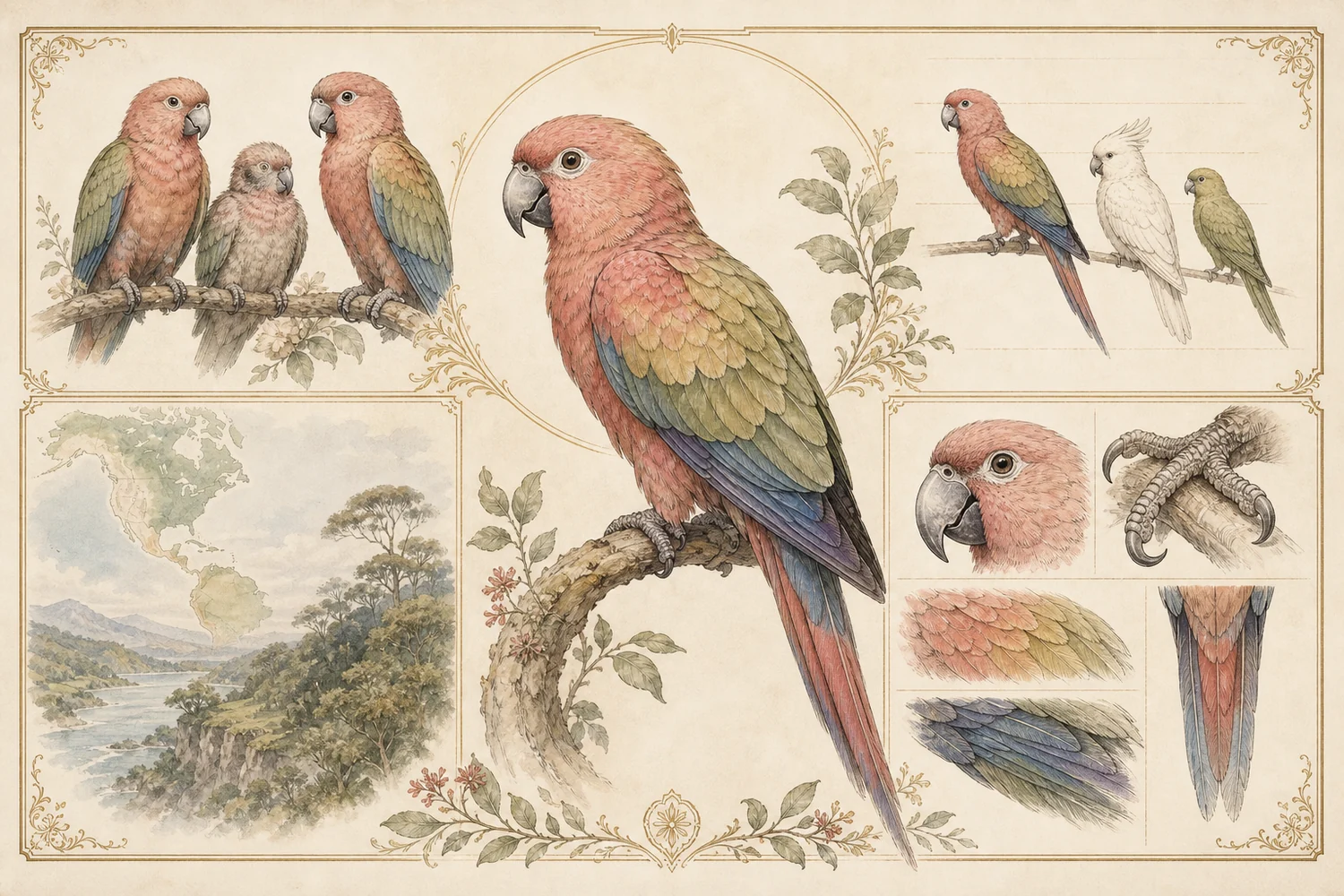
Meet the families
Start with silhouette, scale, posture, and the surprising variety hidden inside the word parrot.
 Choosing · species library
Parrots are not interchangeable pets. Species history helps frame likely size, movement, social behavior, sound, dust, and habitat needs—but individual history, health, learning, and household context still matter.

Begin with the whole bird, then compare the places, proportions, and field marks that make each family distinct.
Start with silhouette, scale, posture, and the surprising variety hidden inside the word parrot.
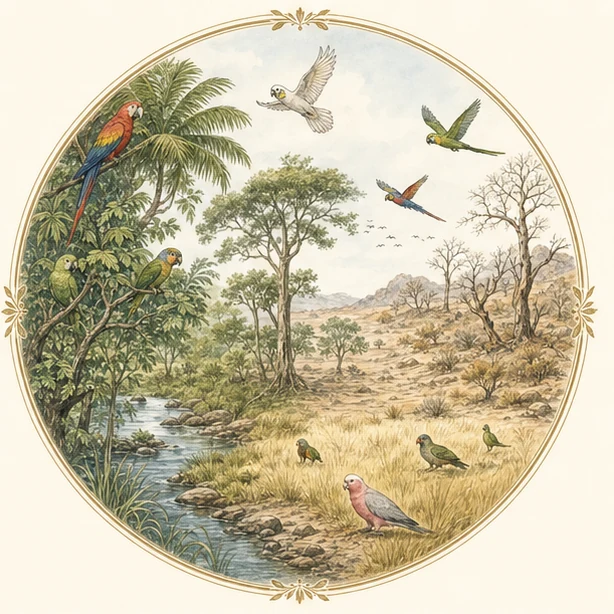
Range is more than a pin on a map: climate, canopy, food, and flock life shape what a bird does.

Body size changes reach, flight space, handling, sound, equipment, and the rhythm of daily care.

Beak, feet, feather texture, color placement, and tail shape turn a glance into an observation.
White-bellied and black-capped caique movement, play, social boundaries, arousal, and daily-care questions.
02Colonial nest-building, vocal behavior, and a conservative reminder to verify current possession and trade rules.
03Vocal learning, social and cognitive enrichment, powder down, and health planning with an avian veterinarian.
04Visible sexual dimorphism, individual behavior, and why diet claims should be checked with an avian veterinarian.
05Outgoing, vocal companions with large space and vocal enrichment commitments.
06Conures, lovebirds, parrotlets, and small companion parrot species spectrum.
07Flock dynamics, seed-to-chop transition, and small parrot care foundations.
08Expressive crest body language, gentle companions, and powder dust care.
09High emotional needs, powder down dust, and multi-decade longevity commitments.
10Large beak enrichment, flight room demands, and long-term companionship.
11Long-tailed flight, strong voice, consent-based handling, and realistic speech-versus-sound expectations.
12Compact Poicephalus identity, independent enrichment, sharp calls, boundaries, and household fit.
13Specialized nectar feeding, wet-food hygiene, iron-storage risk, movement, and intensive daily care.
Companion parrots span very different body sizes, lifespans, flight needs, vocal patterns, dust profiles, and social systems. Treat the shared data as a research index rather than a promise about an individual bird.