
 Living · habitat & gear
Design a home for choice, safety, and flight.
An enclosure is not a jail cell; it is a safe sanctuary where a bird can make choices about movement, sleep, foraging, and rest.
Design from the bird's point of view
Begin with movement: where can the bird stretch, cross, climb, land, retreat, forage, and sleep after bowls and toys occupy the enclosure?
Cage Setup & Layout
Bar spacing, flight width over height, and clean food station positioning.
02DIY Natural Branch Perches
How to identify, prepare, place, inspect, and replace varied natural branches without relying on a species name alone.
03Foraging & Enrichment
Choice-based progression, known materials, supervision, rotation, and inspection.
Three questions reveal more than the product photo
A habitat begins as a set of measurements, but it becomes meaningful only after the bird can use it. Ask:
- Can the bird move across it? Width and clear travel paths often provide more usable movement than a tall, narrow tower. Check the space again after furnishings are installed.
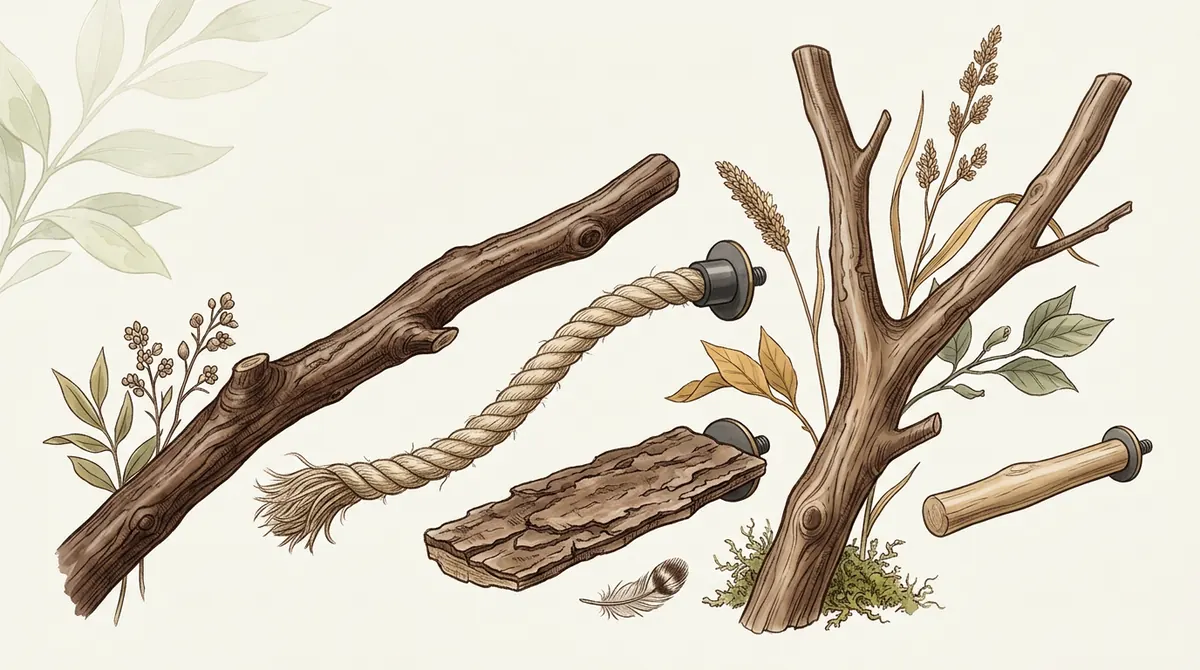
- Do the feet meet more than one surface? A range of stable, appropriately sized perch diameters and textures changes pressure points and encourages different postures. Inspect feet and perches regularly rather than treating any one perch as perfect.
- Can every material be identified? Ask for current documentation about metal, coating, hardware, wood, rope, adhesive, and finish. Watch how the individual bird dismantles objects; safe use depends on condition and behavior as well as the label.
A good habitat contains different kinds of yes
Yes, you can climb here. Yes, you can shred this. Yes, you can watch the room without being in its busiest path. Yes, you can move away from a new object. Choice is not an abstract welfare word; it is visible in the number of safe options a bird can use without waiting for a person.
Leave some open space. Rotate enrichment instead of crowding everything in at once. Put food, water, perches, and sleep areas where droppings and traffic will not constantly contaminate them. Then observe: the bird's favorite route through the habitat may teach you more than the original floor plan.