
Know what the bird already eats
Confirm ordinary intake, preferences, weight trend, and feeding routine before moving meaningful calories into a puzzle.
Review diet transitions Living · enrichment
Foraging should increase activity and control without turning nutrition into a test the bird cannot pass. Begin with an easy success, preserve familiar food access, and progress from the bird's response.
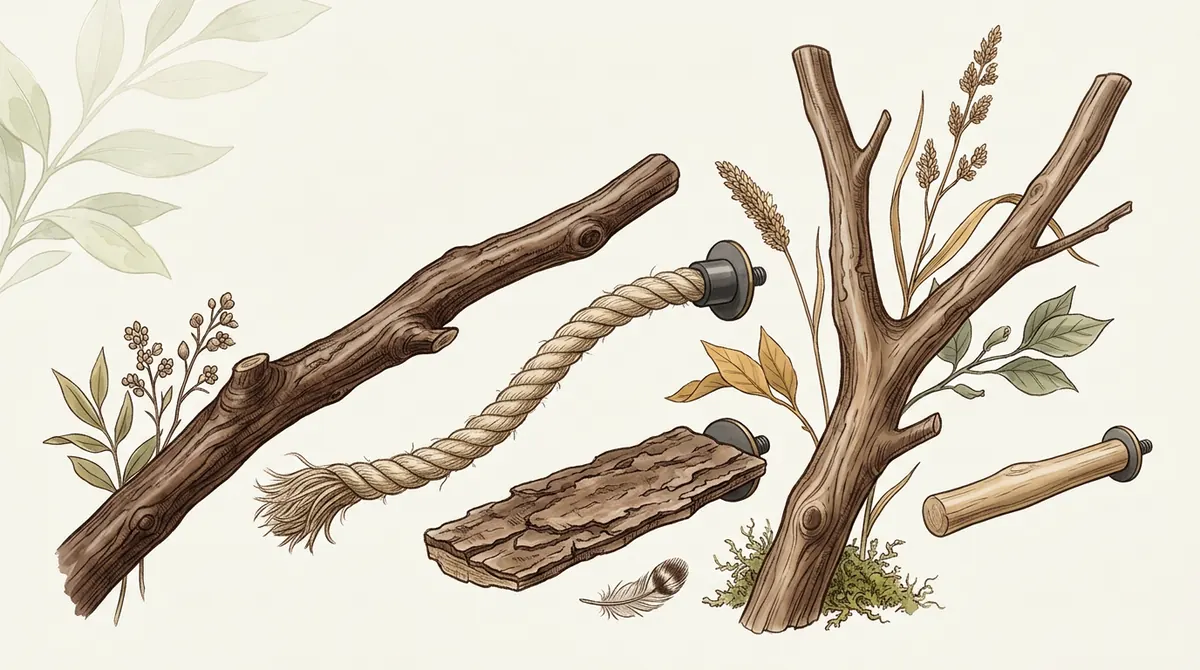
The first lesson is that touching the object can reveal something worthwhile.
Confirm ordinary intake, preferences, weight trend, and feeding routine before moving meaningful calories into a puzzle.
Review diet transitionsUse a loose paper fold, an open cup, or another simple presentation where the food remains easy to locate.
Place the activity at a tolerable distance and reinforce investigation. Do not chase the bird with a new object or force contact.
During learning, a puzzle should not be the only route to enough nutrition, water, rest, or social safety.
Success should remain frequent enough for the bird to understand the next step.
Supervision cannot compensate for an unknown material or an obvious entrapment path.
Use untreated, appropriately sourced materials and documented hardware. Avoid mystery woods, coatings, glues, fibers, metals, and found objects with unknown exposure.
Evaluate the bird's head, beak, toes, nails, and leg band against openings before and after the item is altered.
A new activity, a determined chewer, or a product with moving parts may need continuous observation until use is understood.
Discard items that are moldy, wet, frayed, sharp, unstable, heavily soiled, or no longer fully inspectable.
Keep notes on behavior and difficulty so a small library can evolve with the bird.
These sources provide general enrichment and housing principles. Consult an avian veterinarian about appetite change, ingestion, injury, disability, or behavior that may have a medical cause.